If you just got your first HF rig, there is a good chance someone told you that you "need a tuner" without really explaining why. The term sounds like magic, the boxes are covered in knobs and relays, and you will see people argue online about whether a tuner is even necessary. This guide walks new hams through what an Antenna Tuner actually does, when you really need one, and how to choose between the common types without wasting money.
On paper, every antenna has a specific feedpoint impedance at a given frequency. Your radio, on the other hand, expects something close to 50 ohms resistive. When those two numbers do not line up, you get standing waves on the feedline, heat instead of signal, and a protective circuit in the radio that starts throttling your power back. The tuner sits between the radio and the antenna system and uses inductors and capacitors to transform that oddball impedance into something your rig can tolerate.
That means the tuner is really matching the system to the radio, not magically fixing a bad antenna. A random length of wire fed with poor coax will still be a compromise, even if the tuner shows a beautiful 1.0 SWR at the rig. As a new ham, the goal is to understand when a tuner is a helpful tool and when you are using it to hide bigger problems like lossy feedline or a wildly inappropriate antenna design.
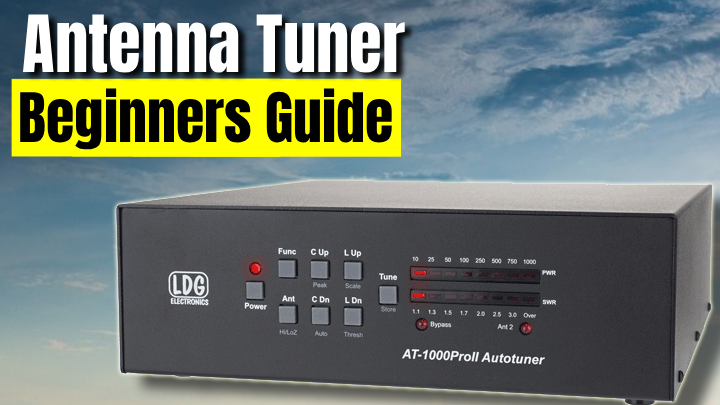
What an antenna tuner really does
The phrase "antenna tuner" is slightly misleading. Inside the box is an impedance matching network, usually some combination of inductors and capacitors arranged as an L, T, or Pi network. By switching in different amounts of inductance and capacitance, the tuner can transform a wide range of complex impedances into something close to 50 ohms at the input port where your radio connects.
Antenna tuner vs no tuner at a glance
| Metric |
With tuner |
Without tuner |
| SWR at the radio |
Typically 1.0:1 to 1.5:1 |
Could be 3:1, 5:1, or worse |
High SWR triggers foldback and can stress finals over time. |
| Usable bandwidth on one antenna |
Multiple bands or wide chunks of a band |
Narrow "sweet spot" around the antenna's resonant point |
You stay on the air instead of running back outside to move wires. |
From your radio's point of view, a successful tune just means "I see a safe SWR and can operate at full output power." That is why the SWR meter built into many radios sits on the radio side of the tuner. As soon as you press the tune button and the tuner finds a match, the SWR meter drops, even if there are still large standing waves further down the coax toward the antenna.
This is the big mental shift for new operators: an antenna tuner makes the radio happy, not the antenna. Good practice is to start with the best antenna and feedline you can manage, then use the tuner to clean up the remaining mismatch and to stretch that antenna across nearby bands. If you have not read up on the basics yet, the Getting Started and Antennas sections on Broken Signal are worth a stop between shopping trips.
How to hook up and use a basic tuner safely
You will see several connector layouts, but the flow is the same on almost every external tuner: radio output to tuner input, tuner output to feedline, feedline to antenna. A few minutes of care here protects the radio and saves you from chasing weird problems later.
- Step 1: Power down the radio, connect the radio's antenna jack to the tuner input, and connect the tuner output to your coax or balanced feedline using the correct ports or balun.
- Step 2: If you are using a manual tuner, start with the settings in the manual's "starting point" chart, set the radio to low power on a clear frequency, and key up while you tweak for minimum reflected power.
- Step 3: Once you have a good match at low power, store that setting if the tuner supports memories, then slowly raise power to your normal level and confirm the SWR at the radio stays reasonable across the part of the band you plan to use.
Types of antenna tuners and where they make sense
There are a lot of boxes that all claim to be Antenna Tuners, but they fall into a few common categories. Knowing the strengths and tradeoffs of each style makes it easier to pick one that fits your first station and leaves you room to grow.
- Manual tuners: These use real knobs and switches that you adjust by hand while watching an SWR meter. They are simple, rugged, and great teachers because you can see exactly how changes in L and C affect the match.
- Automatic tuners (external): These use relays and microcontrollers to search for a match when you hit a tune button or key up at low power. They are fast and convenient, especially if you change bands a lot, but you give up some visibility into what is actually happening.
- Internal and remote tuners: Many modern HF radios have built-in tuners, and there are also weatherproof boxes you mount at the antenna feedpoint. Internal tuners are handy but usually have a limited tuning range. Remote tuners can reduce feedline losses because they match right at the antenna instead of at the shack end of a long coax run.
How tuners affect performance and efficiency
A properly used tuner lets you operate more while still respecting your radio's limits, but it does not magically fix every bad situation. Real components have losses, especially at higher power and on higher bands. A long run of undersized coax feeding a wildly mismatched antenna can turn a lot of RF into heat before it ever leaves the backyard, even if the tuner shows a perfect match at the rig.
For a new ham, the practical approach is to keep feedline runs short, use decent coax, and aim for antennas that are at least somewhat close to resonance on the bands you care about. Then let the tuner take care of the last bit. If the tuner is struggling to find a match or you are hearing a lot less than other stations with similar gear, that is a clue to revisit the antenna system instead of blaming or cranking on the tuner harder.
Practical tips for choosing your first tuner
Before you click "buy now" on the cheapest box you find, take a minute to match the tuner to your radio, your antennas, and how you actually operate. A well chosen entry level tuner can stay in your station for years even after you upgrade radios or add more antennas.
- Match the tuner to your rig's power and bands. If you run a 100 watt HF radio today but might add an amplifier later, it can be worth paying for a 300 or 600 watt rated tuner now instead of buying twice.
- Think about where the tuner will live. If you mostly operate from a fixed station with one or two resonant antennas, an internal or simple manual tuner works fine. If you are into portable or field work, a small automatic tuner that runs off 12 volts and fits in a go bag is a lot easier to live with.
- Plan around your antenna style. End fed wires and ladder line fed dipoles often behave better with tuners that include balanced outputs or are used with an external balun. If your first setup is a basic coax fed multiband vertical, almost any 100 watt rated tuner from a reputable brand will get the job done.
Frequently Asked Questions
What does an antenna tuner actually do?
An antenna tuner makes your radio happy with the load it sees by transforming impedances using inductors and capacitors arranged in an L, T, or Pi network. It matches the system to the radio, not the antenna itself, which lets your radio operate at full power without its high-SWR protection circuit folding back.
Do I really need an antenna tuner as a new ham?
If you have a perfectly resonant antenna on every band you care about, a tuner is nice but not essential. Most new operators are dealing with HOA limits, small yards, or portable setups that force compromise antennas, and in those cases a good tuner is a practical tool that makes more of those compromises usable and keeps your radio comfortable while you learn.
What are the main types of antenna tuners?
There are three main types: manual tuners with real knobs and switches you adjust by hand, external automatic tuners that use relays and microcontrollers to search for a match when you press tune, and internal or remote tuners that are either built into the radio or mounted at the antenna feedpoint.
Does a tuner improve my antenna's actual performance?
No. The tuner only changes what the radio sees at the shack end. A long run of lossy coax feeding a badly mismatched antenna can still turn a lot of your RF into heat before it ever reaches the antenna, even when the SWR meter at the radio reads 1.0:1. A remote tuner mounted at the feedpoint can help by reducing feedline losses, but a shack tuner cannot fix a fundamentally bad antenna.
Can I damage my radio if I tune at high power?
Yes, you can. Always start the tuning process at low power on a clear frequency. Once the tuner finds a good match, store it in memory if your tuner supports that, then raise power gradually to your normal operating level. Keying up at full power into a high SWR can stress your radio's finals and trip protection circuits.
Should I get an internal tuner or a separate external one?
Built-in tuners in modern HF radios are convenient but usually have a limited tuning range, often only working from about 3:1 down. An external automatic or manual tuner has a much wider matching range and can handle end-fed wires, ladder line, and other tougher loads. If you only ever run resonant antennas an internal tuner is fine; if you plan to use compromise or multiband wires, plan on an external box.
Do you really need an antenna tuner as a new ham?
If you are lucky enough to have a perfectly resonant antenna on every band you care about, a tuner is nice but not essential. Most new operators are not in that situation. They are dealing with HOA limits, small yards, or portable setups that force compromise antennas. In those cases, a good tuner is a practical tool that makes more of those compromises usable and keeps your radio comfortable while you learn.
- A tuner matches your radio to the antenna system, it does not magically transform a poor antenna into a perfect one.
- Manual, automatic, internal, and remote tuners each have a sweet spot; pick based on your power level, operating style, and antenna type.
- Good feedline and a reasonable antenna design still matter; the tuner is the finishing tool, not the foundation of the station.
If you are just getting started on HF, pair a simple, reliable tuner with the best antenna you can reasonably install, then spend your time making contacts and learning instead of fighting the gear. When you are ready for the next step, you can always circle back to the radio articles and gear reviews on Broken Signal for deeper dives and specific tuner recommendations.