When the lights go out and cell towers drop, you quickly find out which gear actually matters. For 2026, I wanted an emergency setup that keeps my family in touch with local weather, regional news, and the outside world, even if the grid stays down for weeks. In this review we will look at how the Raddy SL10, Raddy RF757, Radioddity QT80 CB radio, a compact Raddy SP30 solar panel, and Starlink all fit together into a layered disaster communications plan.
Disaster communication is not about chasing specs on a product page. It is about getting a weather alert at 3 a.m., hearing a relief aircraft overhead, or calling a neighbor two miles away when phones are dead. The right mix of radios and power means you stay informed instead of guessing.
The models in this article cover four layers: an all in one emergency radio with light and power bank, a serious general coverage receiver for shortwave and VHF/UHF, a CB radio for local two way, and Starlink as the big gun when local infrastructure is toast. I will also show where a small solar panel like the Raddy SP30 fits into the picture.
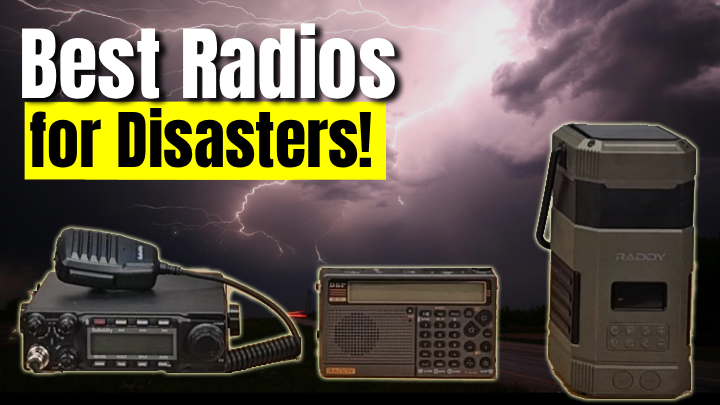
The Swiss army knife radio: Raddy SL10
Every home needs one radio that just lives on the kitchen counter or in the go bag. For me that slot is the Raddy SL10. It is your classic emergency radio done right: AM/FM broadcast, NOAA weather radio, a bright flashlight, a lantern style area light, USB power bank, solar panel, and a hand crank for when everything else is dead.
Quick comparison: best roles for each device
| Metric |
Top pick |
Why It Matters |
| Everyday emergency alerts |
Raddy SL10 |
AM/FM, NOAA weather, loud speaker, and built in light make it perfect for power outages and storms. |
| Long range information & backup internet |
Raddy RF757 + Starlink |
Shortwave, VHF/UHF, aviation band, and satellite broadband keep you informed even when local stations go dark. |
How to build a layered emergency comms kit for 2026
You do not need a bunker full of gear to be ready. A small, smart stack of tools covers most realistic scenarios: local weather, regional intel, and a way to talk or get online when normal networks are gone.
- Step 1: Start with an all in one emergency radio like the Raddy SL10 for AM/FM, NOAA weather, lighting, and basic phone charging.
- Step 2: Add a general coverage receiver such as the Raddy RF757 plus a CB like the Radioddity QT80 for regional intel and local two way comms.
- Step 3: Power it all with a foldable panel like the Raddy SP30 30 W solar panel, and if your budget allows, finish the stack with Starlink for full internet when local infrastructure fails.
Raddy SL10 vs Raddy RF757 vs Radioddity QT80
You could buy any random "emergency radio" online, but each of these models solves a different problem. Rather than crown a single winner, think of them as tools in a layered system, with Starlink sitting above them as the final safety net.
- Raddy SL10: Best for basic household preparedness. It shines at power outage duty: weather alerts, casual AM/FM listening, flashlight, and a quick top up on your phone via USB.
- Raddy RF757: Best for serious information gathering. It covers AM, FM, shortwave, VHF and UHF, and even aviation band, so you can listen to distant broadcasters or aircraft during relief operations.
- Radioddity QT80 CB radio: Best for local two way in a neighborhood or on the road. CB does not require a license and with a reasonable antenna you can usually reach out 5 to 20 miles.
Performance when the lights really go out
During extended outages, power is your true limiting factor. The SL10, RF757, and QT80 all pair nicely with a compact panel like the Raddy SP30. With 30 watts and USB, USB C, and DC outputs, the SP30 keeps handheld radios, flashlights, and small battery banks topped off while still folding down small enough to ride in a go bag or car trunk.
Shortwave and CB also become more valuable as the damage scale grows. If a storm or wildfire is bad enough to knock out your local AM/FM stations, a general coverage radio like the RF757 lets you pull in national and international broadcasters plus airband traffic from aircraft working the disaster. Meanwhile a CB like the QT80 gives you a way to pass traffic down local roads or coordinate with neighbors when phones are overloaded or down completely.
Practical tips before the next storm hits
You do not need to be a licensed ham to start listening. Anyone can monitor weather radio, shortwave, aviation, or amateur bands. If you decide to get on the air, getting your ham ticket is easier than ever and opens the door to more flexible gear and modes. When you are ready, check out the Getting Started section and the Ham Radio hub on Broken Signal.
- Charge, label, and stage your radios. Keep the SL10 where you can grab it in the dark, and store the RF757 and QT80 with spare batteries and an antenna ready to go.
- Pair your radios with solar and power banks. Test the Raddy SP30 on a sunny day so you know how long it takes to top off your phone or handhelds.
- Program and test now, not during the storm. For the QT80, learn which CB channels locals use. For Starlink, set it up once in the clear so you can drop it in place quickly when you really need it.
Frequently Asked Questions
What is the best emergency radio for 2026?
For most households the Raddy SL10 is the best single emergency radio for 2026. It covers AM, FM, and NOAA weather, has a flashlight and lantern, includes a USB power bank, and can be charged from solar, USB, or hand crank, so it stays useful through long power outages.
Do I need a license to use an emergency radio?
No license is needed to listen. Anyone in the US can monitor AM, FM, NOAA weather radio, shortwave, aviation band, and amateur frequencies. CB radio, including the Radioddity QT80, is also license free for transmitting. Transmitting on amateur or GMRS frequencies does require an FCC license.
How do I keep emergency radios powered when the grid is down?
Plan for layered power. Most emergency radios run on AA batteries or a built-in lithium pack that can be charged from USB. A small foldable solar panel like the Raddy SP30, paired with a USB power bank, will keep handheld radios and phones topped off through extended outages without relying on the grid.
Is shortwave still useful in a disaster?
Yes. When local AM and FM stations are knocked off the air by storms, fires, or grid failures, shortwave broadcasters from outside the affected region keep transmitting. A general coverage receiver like the Raddy RF757 lets you pick up national and international news plus aviation traffic from aircraft working the disaster.
Does Starlink replace the need for emergency radios?
No. Starlink is excellent when you can power it and the satellites overhead are healthy, but it depends on a relatively complex chain of equipment, line of sight to the sky, and continuous power draw of around 50 to 100 watts. Local radios cost less, run on tiny batteries, and keep working even when broadband fails. Treat Starlink as a top tier layer on top of your radios, not a replacement.
Can a CB radio still help in a 2026 disaster?
Yes. CB does not require a license, gear is inexpensive, and during disasters truckers and locals still use it for traffic and weather updates. With a decent antenna a base or mobile CB like the Radioddity QT80 will typically reach 5 to 20 miles, which is enough to coordinate with neighbors or pass traffic along nearby roads when phones are down.
So which emergency radio should you buy in 2026?
If you are starting from zero, grab a solid "Swiss army knife" radio first, then layer on range and resilience. The mix in this article covers everything from a short power outage to a long term regional disaster where local infrastructure is badly damaged.
- Pick the Raddy SL10 if you want a simple, reliable emergency radio for AM/FM, NOAA weather, lighting, and phone charging.
- Add the Raddy RF757 and Radioddity QT80 if you care about hearing distant shortwave, aviation, and having local two way during bigger events.
- Use a Raddy SP30 panel for power and consider Starlink as your top tier option when you need full internet back in a disaster zone.
If you are serious about disaster preparedness in 2026, build your layered comms kit now, then head back to the Gear Reviews and Meshtastic sections for even more ideas to keep you talking when everything else goes quiet.