Most new hams buy a 100 watt HF radio, get on the air, and pretty quickly wonder if a big amplifier is the magic ticket to being heard everywhere. An amp can absolutely help, but it also adds cost, complexity, and serious RF safety considerations. This guide walks through what a ham radio amplifier really does, who it helps the most, and why most beginners should focus on antennas, operating skills, and RF safety before lighting up 1500 watts.
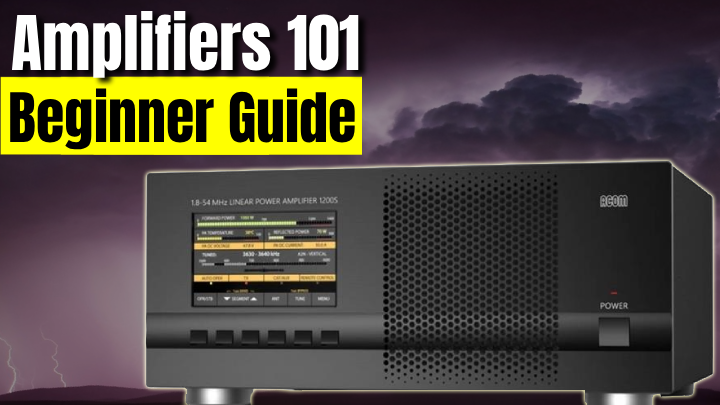
At a basic level, a ham radio amplifier is just a power booster. Your HF rig might put out 50 to 100 watts. A typical amateur amplifier takes that drive and boosts it to anything from a few hundred watts up to the legal limit. When it is working correctly, it is "linear," which means it simply makes your signal bigger without distorting it or splattering across nearby frequencies.
The catch is that power is only part of the story. Every time you double your power, the received signal strength only climbs a few decibels. That helps, but it is not night and day unless you are going from very low to moderate power. On top of that, cranking up the watts dramatically raises RF exposure, heating, and RFI risks. Running 1500 watts in a small room with poor bonding and grounding can turn a fun radio hobby into a safety and neighbor-relations problem in a hurry.
What a ham radio amplifier actually does for your signal
Think of power as one part of a chain that starts at your microphone or key and ends at a distant receiver. Your radio, feedline, antenna, propagation, and the other station's noise level all play a role. The amplifier only touches one piece: it increases the RF power at your station output.
Typical power levels in a beginner HF station
| Metric |
Value |
Why It Matters |
| Barefoot HF radio |
50 - 100 watts |
Enough for worldwide contacts with a good antenna and reasonable band conditions. |
| Medium HF amplifier |
300 - 600 watts |
Often the sweet spot where you gain a noticeable bump without maxing out your electrical and RF safety budget. |
| Legal limit amplifier |
Up to 1500 watts PEP (in many countries) |
Highest allowed power, but RF exposure, RFI, and equipment stress are all significantly higher, especially in small stations. |
How to decide if you're actually ready for an amplifier
For a brand new ham, the honest answer is usually "not yet." Before you think about a big box that can put 1500 watts into your feedline, make sure the rest of your station is working well at 50 or 100 watts. That means a decent antenna, clean audio, basic operating skills, and at least a beginner understanding of RF exposure and local regulations. Once those boxes are checked, an amp can be a smart upgrade instead of an expensive crutch.
- Step 1: Get your basic station in order. That means a reliable HF radio, a reasonably efficient antenna, and solid feedline and grounding. If you have never done a simple RF exposure calculation or thought about where your family sits relative to the antenna, hit pause on the amp idea.
- Step 2: Learn the RF safety basics. Understand concepts like near-field vs far-field exposure, controlled vs uncontrolled areas, and how duty cycle affects average power. High power modes like digital and AM can push your average RF output way up. Going from 100 watts to 1500 watts multiplies those concerns.
- Step 3: Once you are comfortable with safety and your antenna system is sorted, decide whether a medium-power amp (300 - 600 watts) meets your goals better than a full legal limit box. A smaller, well used amp is often a better match for a beginner station and a typical home electrical panel.
Amplifier vs better antenna vs more operating skill
One of the biggest traps for new hams is assuming that more power is always the first, best answer. In practice, you usually get more long term value out of improving the antenna and your own technique first. An amp is the icing on the cake, not the cake itself.
- Improving the antenna (height, efficiency, pattern) usually helps both your transmit and receive performance. That is a two-for-one gain that no amplifier can provide.
- Better operating skills, like using the right band at the right time, knowing how to call, and listening carefully, can make 50 watts sound like much more. New hams often leave a lot of performance on the table here.
- An amplifier mainly helps when you are already doing the right things but need a little extra edge to get through noise or pileups. It is not a great tool for fixing a poor antenna in a high-noise environment.
What kind of performance boost can you really expect?
Power increases look big on paper, but the dB scale is sneaky. Doubling power from 100 watts to 200 watts is only a 3 dB change. Many S-meters are roughly 6 dB per S-unit, though in real life they vary. That means you need around four times the power to truly bump the meter by one honest S-unit.
So going from 100 watts to 400 watts is about a 6 dB jump and maybe one S-unit. Jumping all the way from 100 watts to 1500 watts is roughly 10 to 12 dB, which might be one and a half to two S-units at the other end. That can absolutely make the difference between being in the noise and being copyable, especially on HF. But it is not the night-and-day transformation many people expect when they see a big number on the front panel.
Practical tips for beginners thinking about amps
There is nothing wrong with dreaming about a shiny new amplifier while you are studying for your license or working your first few HF contacts. The key is to bring a little discipline to the decision so you do not end up with more power than your station, house, or RF safety knowledge can comfortably support.
- Spend real time at 50 - 100 watts first. If you have not yet made plenty of contacts with a simple antenna system, you have more to gain from practice and antenna tweaks than from more watts. Check out the Getting Started section on Broken Signal for ideas.
- Work on your antenna before your amplifier. Even on a small lot, changes in height, orientation, or type of antenna can make a dramatic difference. The antenna articles will give you far more "free dB" than a rushed amp purchase.
- When you finally shop for an amp, be honest about your station. Consider your electrical panel, outlet capacity, ventilation, and where people sit or sleep relative to the antenna. Read real-world reviews and station writeups in the gear section and look for people running similar setups to yours.
Frequently Asked Questions About Ham Radio Amplifiers
Do I need an amplifier as a new ham radio operator?
Most new hams do not need an amplifier right away. Your first priority should be getting a good antenna system, learning proper operating techniques, and understanding RF safety. An amplifier becomes useful once you have maximized your antenna performance and operating skills, and you find yourself limited by your 100 watt output power.
How much power increase will I get from a ham radio amplifier?
A typical ham radio amplifier can boost your signal from 100 watts to anywhere from 300 to 1500 watts. However, the perceived improvement is logarithmic. Going from 100 to 400 watts gives you about 6 dB gain, roughly one S-unit on the receiver. Jumping from 100 to 1500 watts provides approximately 12 dB, or about two S-units.
What is the legal power limit for ham radio in the United States?
In the United States, the FCC allows up to 1500 watts PEP (peak envelope power) output for amateur radio operations on most bands. However, hams are always required to use the minimum power necessary to maintain communications, and must comply with RF exposure safety regulations.
What are the main safety concerns with using a ham radio amplifier?
The primary safety concerns include RF exposure to people near the antenna, RFI (radio frequency interference) to electronic devices and neighbors, high voltage inside the amplifier, increased heat generation requiring proper ventilation, and the need for adequate electrical service to handle the power draw. Proper grounding, bonding, and understanding RF exposure calculations are essential before operating high power.
Should I upgrade my antenna or buy an amplifier first?
In almost all cases, you should upgrade your antenna before buying an amplifier. A better antenna improves both your transmit and receive performance, while an amplifier only boosts your transmitted signal. Additionally, an efficient antenna system will make better use of amplifier power when you do eventually add one.
How much does a ham radio amplifier cost?
Ham radio amplifier prices vary widely. Entry level solid state amplifiers in the 300-500 watt range start around 1000 to 1500 dollars. Mid range amplifiers offering 600-800 watts typically cost 2000 to 3000 dollars. Legal limit amplifiers capable of 1500 watts can range from 3000 to over 6000 dollars for high end models. Used amplifiers can offer significant savings but require careful inspection.
What electrical requirements do I need for a ham radio amplifier?
Most legal limit amplifiers require a dedicated 240V AC circuit with 20 to 30 amp capacity, similar to what an electric dryer uses. Lower power amplifiers may run on 120V AC circuits. You will need to verify your home electrical panel can support the additional load, and have a qualified electrician install appropriate circuits and outlets if necessary.
What is the difference between solid state and tube amplifiers?
Solid state amplifiers use transistors and are typically more compact, efficient, and require less maintenance. They usually provide instant operation without warm up time. Tube amplifiers use vacuum tubes and are often preferred by some operators for their ability to handle mismatches better and potentially more forgiving characteristics. Tube amps require periodic tube replacement and warm up time before operation.
Should a beginner buy a ham radio amplifier?
For most new hams, an amplifier should be a later upgrade, not part of the starter kit. Your first big wins will come from learning the bands, polishing your operating skills, and getting the best antenna you can manage in your space. Once you understand RF safety and you are bumping into the limits of 100 watts, an amp starts to make a lot more sense.
- A ham radio amplifier boosts your signal but does not fix a poor antenna, bad timing, or a noisy receive setup.
- Running hundreds or thousands of watts raises RF exposure, RFI, and station design challenges, especially in small homes and apartments.
- Waiting until you understand RF safety, legal power limits, and basic station engineering will make your amplifier purchase safer and more satisfying.
If you are still early in your ham journey, keep learning, keep building, and treat the big amp as a future project. When you finally flip that standby switch for the first time, you will know your station, and your RF safety habits, are ready for the extra power.