TL;DR — Three DXpeditions that went past "vacation style"
- Core idea: Swains, Bouvet, and Scarborough Reef are classic examples of truly extreme DXpeditions, not casual island trips.
- Why it matters: Working these rare DXCC entities means chasing stations that fought brutal heat, cold, waves, and isolation to get on the air.
- Key benefit: Understanding what goes into an insane DXpedition helps you appreciate each QSO and plan better trips of your own.
- Who it's for: DX chasers, contesters, and any ham who's ever wondered what it really takes to activate a spot this remote.
When most hams picture a DXpedition, they see palm trees, cold drinks, and a barefoot rig parked under a sunshade. Some trips look like that. The three in this article absolutely don't. Swains Island, Bouvet Island, and Scarborough Reef pushed small teams of operators into heat, cold, waves, and logistics so extreme that just getting on the air felt like a miracle.
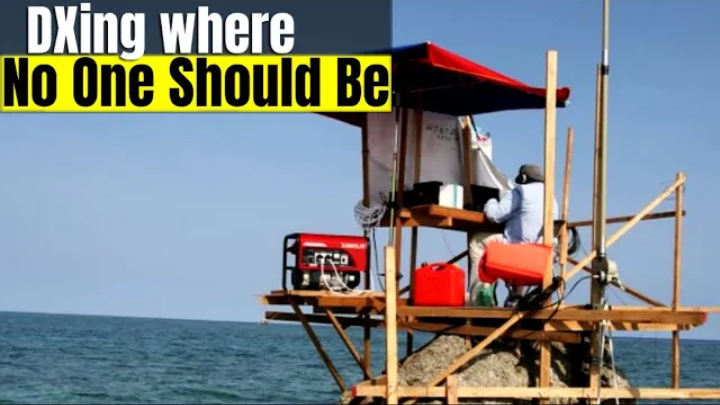
Not every epic DX story involves custom-built platforms bolted into bare rock, or tents flapping on a subantarctic volcano. But the ones that do tend to stick in your head, and they tend to light up the clusters like few others. These three DXpeditions sit right at that intersection where radio, adventure, and raw survival meet.
This isn't a ranking of "best" ops or most expensive projects. It's a look at three extreme environments and the teams that dragged HF gear into places most people only see on weather charts and nautical maps.
What actually makes a DXpedition "insane"?
Most DXpeditions are just regular trips with some extra logistics. You bring radios, antennas, spares, and a plan for power and network. Hard work, sure, but mostly predictable. The ones in this list cross a different line. They combine several nasty factors at once: extremely limited landing options, dangerous weather, no infrastructure at all, and almost no room for mistakes.
Quick comparison: Swains vs Bouvet vs Scarborough Reef
| Metric |
Swains Island |
Bouvet Island |
Scarborough Reef |
Why It Matters |
| Environment |
Crushing tropical heat, dense jungle, bugs, salt air |
Subantarctic cold, glaciers, violent storms and surf |
Wave-swept reef, almost no dry land, fully exposed |
Dictates everything from antennas to shelter to operating shifts. |
| Landing & access |
No dock or runway, gear ferried through surf by hand |
Small landing window on cliffs, heavy surf, very few safe spots |
Boats to rocks, then ladders and platforms bolted to bare stone |
Every piece of gear that touches the island has to survive the trip in. |
Swains Island: survival camping with pileups
Swains Island looks friendly at first glance. It’s a picture-perfect atoll in the Pacific, about 200 miles north of American Samoa. From drone shots it’s all bright water, white sand, and green trees. On the ground, it’s another story. Under the palm trees, the heat feels like it’s trying to cook you from the inside out, and the air barely moves. Mosquitoes and sweat are part of the uniform.
- Step 1: Get there on a slow, pounding sea voyage with all food, fuel, towers, radios, and spares packed in crates that can survive repeated saltwater hits.
- Step 2: Land on a beach with no dock. Every generator, mast section, and coax spool has to be dragged through the surf by hand, often in several trips.
- Step 3: Build not one but two camps wedged between the tree line and the water, then fight heat, insects, and fatigue while you run wall-to-wall pileups.
Why Swains Island is tougher than it looks
The W8S team proved that Swains Island is way more than a pretty background for QRZ photos. The heat regularly pushed toward 40 °C, and once you’re ashore there’s no convenient place to hide from it. Humidity turns every job into hard labor, from stacking yagis to digging guy anchors. A simple tower climb feels like a workout in a steam room.
On an average vacation island, you can take a break in air conditioning and get a cold drink. On Swains, cool air comes from the trade wind if you’re lucky. Power is whatever your generators and fuel stash can deliver. Water is what you brought or can safely store. And when something breaks, you can’t run to a hardware store. The result is a station that looks routine from the other side of the pileup but is held together by careful preparation and a lot of sweat.
Propagation rewards the pain. Swains sits in a sweet spot for path openings into North America, Asia, and Europe, which means huge demand and very heavy pileups. The operators have to manage that while trying not to overheat, staying hydrated, and grabbing just enough sleep to keep the rate up. It’s not luxury camping. It’s a long, hot sprint with HF instead of a finish line.
Bouvet Island: the edge of Antarctica on a volcano
Bouvet often gets called the most remote island on Earth, and that’s not far off. It’s a small, uninhabited volcanic rock sitting in the Southern Ocean, surrounded by cold water and powerful weather systems. The 3Y0J team had to sail through heavy seas just to reach it, then figure out how to land on a shoreline that really doesn’t like visitors.
There’s no welcoming beach, no harbor, and almost no flat ground. Most of Bouvet is glacier and steep rock. Landing gear meant dealing with surf that can flip small boats and throw people against the cliffs. Once ashore, the team had to haul radios, shelters, and fuel over slippery, uneven terrain while the wind tried to rip everything out of their hands.
Operating on Bouvet when everything wants to shut you down
The 3Y0J team ended up living and operating out of tents pitched on exposed volcanic ground not far from the sea. Antennas were lashed to rock outcrops and guyed every way they could manage in the short weather windows they were given. Everything ran from generators that had to be protected from spray, snow, and freezing air.
Supply runs from the ship to the island had to be timed between storms. There was almost no margin for error: if the sea built up or the wind shifted, operations stopped whether the pileup was still screaming or not. The team still logged tens of thousands of QSOs before conditions and safety made it clear they’d squeezed everything they could out of that trip.
For most of us, Bouvet shows up in the log as a quick "5/9, thanks" and a happy dance afterward. On their side of the pile, it meant soaked gear, frozen fingers, constant safety checks, and the knowledge that getting off the island safely was just as important as any new one you or I might work.
Scarborough Reef: working HF from almost nothing
If Swains is brutal heat and Bouvet is brutal cold, Scarborough Reef is brutal minimalism. It’s basically a cluster of rocks in the South China Sea that barely stick out of the water at high tide. No real beach, no soil, no trees, no buildings. Just jagged coral and rock, waves, and a lot of empty horizon.
In 2007, a team set out to activate this tiny DXCC entity under the call BS7H. They knew there wasn’t enough dry land to just throw up tents and crank up a generator. So they built wooden platforms custom fitted to the rocks themselves. Imagine carpentry that has to hold a person, a chair, a radio, and a power source above incoming surf, all while surviving tide cycles and constant motion.
Life on a platform: why Scarborough Reef tops the list
The BS7H operators worked in shifts from these platforms, with salt spray, sun, and wind as constant company. There was no cozy operating tent, no "safe zone" if a wave decided to hit just wrong. At high tide, most of the reef disappears. Those platforms were the only reason the operation existed at all.
Each operator had barely enough room for the station and themselves. Getting on and off the platforms required timing, balance, and a very healthy respect for the sea. Every QSO meant the gear, the power system, and the operator all survived another wave cycle. When the call finally went silent, they tore it all down in a hurry and got out, leaving nothing behind but stories and logs.
Scarborough Reef sits at number one here because it strips a DXpedition down to the bare minimum: a few rocks, some lumber, and operators willing to put themselves in a place where nature is very clearly in charge.
How extreme DXpeditions actually come together
On the surface, these trips look like "just another DXpedition, but farther." Under the hood, they’re multi-year logistics and safety projects that happen to end in pileups. If you’ve ever thought about joining something bigger than a weekend islands-on-the-air trip, it helps to understand how these teams pull it off.
- Long lead times: Permissions, ships, insurance, and funding can take years to lock in, especially when governments and protected areas are involved.
- Redundant planning: Generators, radios, feeds, and antennas all need backups. If one failure can end the trip, it gets a backup.
- Team selection: Extreme DXpeditions look for operators who can copy CW or SSB in chaos, fix gear on the fly, and stay calm when conditions get ugly.
Frequently Asked Questions
These extreme trips raise a lot of the same questions, whether you're a brand-new Technician or already chasing Honor Roll.
Is calling these DXpeditions "insane" fair to the teams?
When hams say a DXpedition is insane, they usually mean the environment and effort, not that the operators are reckless. The teams that pulled off W8S, 3Y0J, and BS7H were careful, highly trained, and very focused on safety. The "insane" part is choosing to bring radios into places most people would never volunteer to work in.
Do you need huge amps and towers at home to work rare DX like this?
Big stations definitely help, but they're not the only way in. Many stations worked these DXpeditions with modest power and wire antennas. The trick is timing, patience, and listening carefully to how the operators run their split. Studying their operating tips before they go on the air matters just as much as squeezing out another 2 dB from your station.
How do these DXpeditions handle safety in such hostile places?
Safety plans are baked in from day one. That includes evacuation routes, medical gear, strict rules about weather limits, and clear authority for team leaders to shut things down when it doesn't feel right. On the air, they may sound relaxed. Off the mic, they're constantly checking conditions, fatigue, and gear.
Where can I learn more or follow future DXpeditions?
Cluster spots and DX bulletins are the obvious places, but many teams now run detailed websites and social media feeds. If you enjoy this kind of thing, keep an eye on the DXpeditions page and ARRL-style news sources, and bookmark sites for any big trips you want in your log.
Practical takeaways if you want to chase or join big DX
Most of us will never operate from Bouvet or Scarborough Reef, and that’s fine. You can still borrow lessons from these "insane" DXpeditions whether you’re working them from your backyard or planning a smaller island activation of your own.
- Study how the successful teams planned power, shelter, and antennas for hostile environments, then scale those ideas down for your own portable work.
- Prepare your station at home the same way you would for a contest: clean RF paths, known SWR, easy band changes, and a clear operating strategy.
- Use smaller trips to build experience. A weekend portable operation, a simple IOTA-style island trip, or a local park activation can teach you a lot before you ever apply for something bigger.
Are these insane DXpeditions worth all the trouble?
Swains Island, Bouvet Island, and Scarborough Reef show what happens when a love of radio meets real-world adventure. These DXpeditions weren’t vacations. They were carefully planned operations that traded comfort for the chance to put rare DXCC entities on the air and give thousands of stations a shot at something they might never see again.
- Swains proves that even a "tropical" DXpedition can feel more like survival camping than a beach trip.
- Bouvet reminds us that some contacts only exist because operators are willing to stare down Antarctic-style conditions.
- Scarborough Reef takes the idea of portable operation to the extreme, working from platforms bolted into rocks that barely clear the sea.
If this kind of thing sparks your imagination, start small and build up your skills. Get your feet wet with easier islands, upgrade your portable gear, and dig into our other articles on getting started in ham radio, portable antennas, and field-ready gear. Every legendary DXpedition started with someone deciding to go one step farther than the last trip.