TL;DR — SWR is a fuel gauge, not a dyno
- Core idea: SWR shows how well your radio is matched, not how efficiently your antenna radiates.
- Why it matters: A perfect 1:1 dummy load radiates almost nothing, and your radio still feels happy.
- Key benefit: Use SWR to protect the rig and find problems, not as a score for antenna "goodness."
- Who it's for: New hams building first stations and trying to make sense of meters, tuners, and dummy loads.
You hook up your first antenna, key the mic, and stare at that little SWR meter like it is a lie detector. The number looks nice and low, so you assume the antenna is "good." Then you call CQ and nobody comes back. What gives? SWR is important, but it is only telling you one piece of the story about your station, not whether your antenna is actually efficient or getting your signal out.
A helpful way to think about SWR is to compare it to the fuel gauge in your car. The fuel gauge tells you how much gas is in the tank. That is important, but it does not tell you how strong the engine is, how slippery the tires are, or whether you left the parking brake on. SWR is the "fuel gauge" of match between radio, coax, and antenna. It can warn you when something is really wrong, but it cannot promise strong performance.
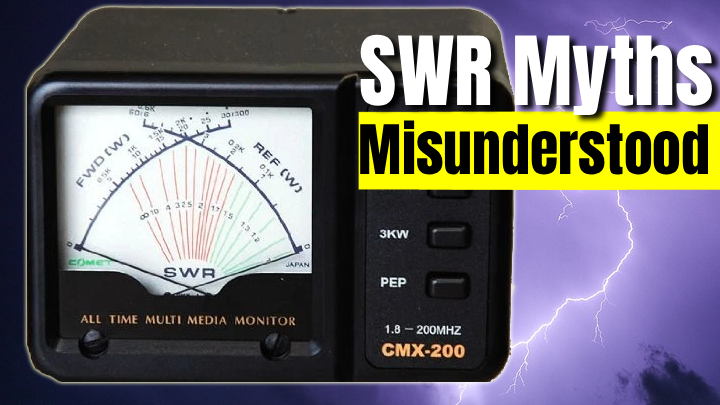
To understand why, you have to meet two simple but powerful ideas from basic RF: resistance and reactance. Resistance is where power gets used up and turned into something else, like heat or radio waves. Reactance is where energy just sloshes back and forth between electric and magnetic fields, like a spring bouncing up and down. SWR cares about both. Antenna efficiency mostly cares about the part that actually gets out as RF instead of warming something up.
What SWR actually measures (and what it does not)
SWR stands for Standing Wave Ratio. In simple language, it tells you how much of your RF power is flowing toward the antenna compared to how much is being reflected back toward the radio. A perfect 1:1 SWR means everything that reaches that point in the line "looks" like 50 ohms and almost no power is being reflected there.
SWR vs antenna efficiency at a glance
| Metric |
Typical target |
Why It Matters |
| SWR (Standing Wave Ratio) |
Under 2:1, under 1.5:1 is great |
Shows match between radio, feedline, and load so the rig can deliver power safely. |
| Antenna efficiency |
As high as practical |
Tells you how much of that power becomes RF in the air instead of heating the antenna, trap coils, or coax. |
Here is the key trap for new operators: SWR only cares about the match at the point where you measure it. If the load looks like 50 ohms, the meter says "nice job" and goes back to sleep. It does not know whether that 50 ohms is a good radiator, a warm resistor in a dummy load, or a bunch of loss in long coax and a compromise antenna.
That is why a dummy load is the classic eye opener. A good 50 ohm dummy load gives you a perfect 1:1 SWR. Your radio is thrilled. But almost all of your RF is turned into heat inside that black can. It is a "perfect" load and a terrible antenna at the same time. That one example is enough to prove that low SWR does not equal a good antenna.
How to read your SWR meter without losing your mind
You do not need a deep math background to get useful information from SWR. You just need to know what the number is trying to tell you and where it fits into the rest of the system. Treat it as one tool in the box, not the final judge.
- Step 1: Check SWR near the middle of the band segment you actually care about, not just anywhere the meter dips.
- Step 2: Aim for under about 2:1 at the radio. If you see 1.3:1 vs 1.5:1, do not obsess over that tiny difference.
- Step 3: If SWR is high, use it as a clue: wrong frequency, bad connection, shorted coax, or a very reactive antenna that needs length changes or a tuner.
SWR, resistance, and reactance in plain language
The impedance the radio sees is made of two parts. One part is resistance. That is the part that actually uses power. Some of that resistance is good, like the radiation resistance of the antenna that turns RF into waves. Some of it is bad, like resistance in small gauge wire, lossy traps, loading coils, baluns, and cheap coax that turn RF into heat instead of signal.
The other part is reactance. Reactance is what you get from capacitance and inductance. It does not burn up power by itself. It stores energy and then gives it back, like a spring or a pendulum. When the antenna system has a lot of reactance at a given frequency, the impedance swings away from a clean 50 ohm value and the SWR rises. That extra reactive "wiggle" also means more energy is bouncing on the line instead of cleanly leaving as RF.
A simple beginner friendly way to say it:
- Resistance does work. Some becomes useful radiation, some becomes heat.
- Reactance mostly moves energy back and forth and shows up as a mismatch.
- SWR is reacting to both, so a "nice" number does not tell you how much is heat vs signal.
Why the dummy load paradox matters
Picture two setups on your desk. In one, your radio feeds a 50 ohm dummy load. In the other, it feeds a long, thin, lossy mobile whip that is barely above the car roof. In both cases, the SWR meter can easily show 1.1:1 or 1.2:1. The radio is equally happy in both cases, but your signal reports will not be.
The dummy load is nearly 100 percent resistive, and almost all of that resistance is pure heat. The lossy whip might have a small chunk of "radiation resistance" plus a larger chunk of loss resistance in the whip, mount, and body. Both can present 50 ohms total to the radio. Neither is what you would call an efficient antenna system, but the SWR numbers look great. This is why experienced operators care about antenna design, height, and location first, and fine SWR numbers second.
What SWR numbers actually mean something
Modern HF and VHF rigs are built to protect themselves. Most of them start reducing power somewhere between about 2:1 and 3:1 SWR at the radio. So the first job of watching SWR is simple: keep the rig out of the danger zone.
Good, great, and not worth worrying about
| SWR at the radio |
Practical meaning |
What you should do |
| 1.0:1 to 1.5:1 |
Excellent match. Losses from mismatch are tiny. |
Be happy. Focus on antenna height, pattern, and noise instead of chasing perfection. |
| 1.5:1 to 2.0:1 |
Quite good for most stations. |
Safe for almost all radios. Fix if it is easy, but do not lose sleep over it. |
| 2.0:1 to 3.0:1 |
Radio may start reducing power. |
Worth some troubleshooting: feedline length, antenna length, connections, or use a tuner. |
The actual power difference between 1.2:1 and 1.5:1 is tiny, often only a couple of percent. Nobody on the air can hear that. Chasing that last little bit can consume hours that would be better spent operating, logging contacts, or planning a better antenna location. Once you are comfortably under 2:1 at the radio, think in terms of overall station efficiency, not just the SWR readout.
Common beginner SWR mistakes
Every ham fumbles with SWR at first. Here are the patterns that show up over and over when people are just starting out.
- Tuning for the lowest dip, not the right frequency. If you only chase the lowest SWR number on the meter, you may end up resonant well below or above the band you actually want. Always check frequency as well as SWR.
- Thinking a tuner "fixes" a bad antenna. A tuner can make the radio see 50 ohms, but it cannot move an antenna higher, shorten lossy coax, or turn a poor ground into a good one.
- Ignoring feedline losses. Long runs of small coax can hide a mismatch by turning reflected power into heat. Your meter at the radio sees a nicer SWR, but your signal is weaker.
- Panicking above 1.2:1. Many beginners post screenshots of 1.4:1 SWR and ask what is "wrong." Usually the honest answer is: nothing worth fixing.
If you are still in the early stages of building your first station, it helps to zoom out. Start with the basics in the Getting Started section, then look at antenna ideas in the Antennas area instead of just staring at the meter. A simple, well placed antenna with a 1.7:1 SWR will usually beat a compromised one with a perfect match.
How tuners, coax, and the antenna share the blame
When you see an SWR number at the radio, you are looking at the combined behavior of the whole chain: radio, tuner (if you have one), feedline, and antenna. The meter has no idea which part is doing what. That is the operator's job to sort out.
An antenna tuner mostly cancels reactance and shifts the apparent impedance so the radio sees 50 ohms. Coax has its own loss and can sometimes "smooth out" a mismatch by warming up along the way. The actual antenna may be very short, too close to metal, or using thin wire with extra resistance. All of that can still add up to "50 ohms at the shack" while stealing a chunk of your RF power on the way to the sky.
Here is a quick mental checklist when you are trying to improve things:
- Get the antenna as high and clear of nearby metal and noise sources as you can.
- Use decent coax, an appropriate length, and avoid sharp bends or crushed sections.
- Use a tuner to make the radio happy after you have done the easy physical improvements.
If you ever wonder whether an upgrade helped, listen to real reports. Log signal reports, pay attention to who you can and cannot hear, and compare before and after on air results. That tells you far more about antenna efficiency than tiny changes to SWR on the meter. You can always circle back later and look at receiver performance and tools in the SDR section if you want to dig deeper.
Practical SWR rules for new hams
By now you have seen why SWR is useful but limited. Here are some simple rules of thumb you can actually live with when you are wiring up a new radio or hanging your first dipole in a tree.
- Under 2:1 at the radio is good enough for most casual operating. Make contacts and get experience before you worry about squeezing it lower.
- Under 1.5:1 is great if you can get it without crazy effort. If changing the antenna length or height gets you there, nice. If not, stop chasing it.
- A tuner keeps the radio safe, but it is not magic. Use it as a tool, not as permission to ignore antenna design and placement.
When you are ready to go beyond the basics, spending time on antenna choices and layout will pay off more than obsessing over tiny SWR changes. That might mean a better feed point, a different band specific antenna, or eventually a more permanent installation like the ones often discussed in gear focused pieces on Broken Signal gear reviews.
Frequently Asked Questions
Does a low SWR mean my antenna is efficient?
No. SWR only tells you how well the antenna and feedline are matched to the radio. A dummy load has a perfect 1:1 SWR and is almost 0 percent efficient at radiating. Efficiency depends on how much of the power becomes useful RF in the air instead of heat.
What is a good SWR for a beginner ham station?
Anything under about 2:1 is generally fine and safe for modern radios. Under 1.5:1 is great, and you usually will not notice any on-air difference between 1.2:1 and 1.5:1. Chasing a perfect 1:1 is rarely worth the effort.
If I use an antenna tuner, does that make my antenna work better?
An antenna tuner mostly makes your radio happy. It cleans up the mismatch so the rig sees a safe SWR, but it does not magically fix a lossy or too-short antenna. The system may still waste power as heat in the antenna or coax.
Why does my dummy load show perfect SWR but I cannot make contacts?
A dummy load is basically a resistor designed to turn RF into heat instead of radiation. Your radio loves it, because it presents a perfect 50-ohm match and a 1:1 SWR, but almost all your power becomes heat in the load instead of a signal on the air.
So what should you really watch: SWR or efficiency?
SWR is still worth watching, but mainly as a safety and troubleshooting tool. It tells you whether your radio can deliver power comfortably into whatever is on the other end of the coax. It does not promise that the antenna itself is doing a good job turning that power into RF that other people can hear.
- Treat SWR like a fuel gauge that warns you when things are way off, not a score for antenna quality.
- Remember the dummy load paradox: 1:1 SWR can mean "all heat, no signal."
- Spend more effort on antenna height, location, and design than on squeezing 1.4:1 down to 1.1:1.
Get your SWR into the comfortable zone, then go make contacts and learn how your station really behaves on the air. The more time you spend operating, the easier it becomes to tell whether the next upgrade should be feedline, antenna, or something completely different.